Biochemical Profile
Classification: Fat-soluble vitamin-like substance; Quinone
Chemical Structure/Properties: Coenzyme Q10, also known as ubiquinone, is a benzoquinone with a long isoprenoid side chain. The “10” refers to the number of isoprenyl chemical subunits in its tail. It exists in two primary forms within the body: the oxidized form, ubiquinone, and the reduced form, ubiquinol, which acts as a potent lipid-soluble antioxidant.
Metabolic Function & Mechanism
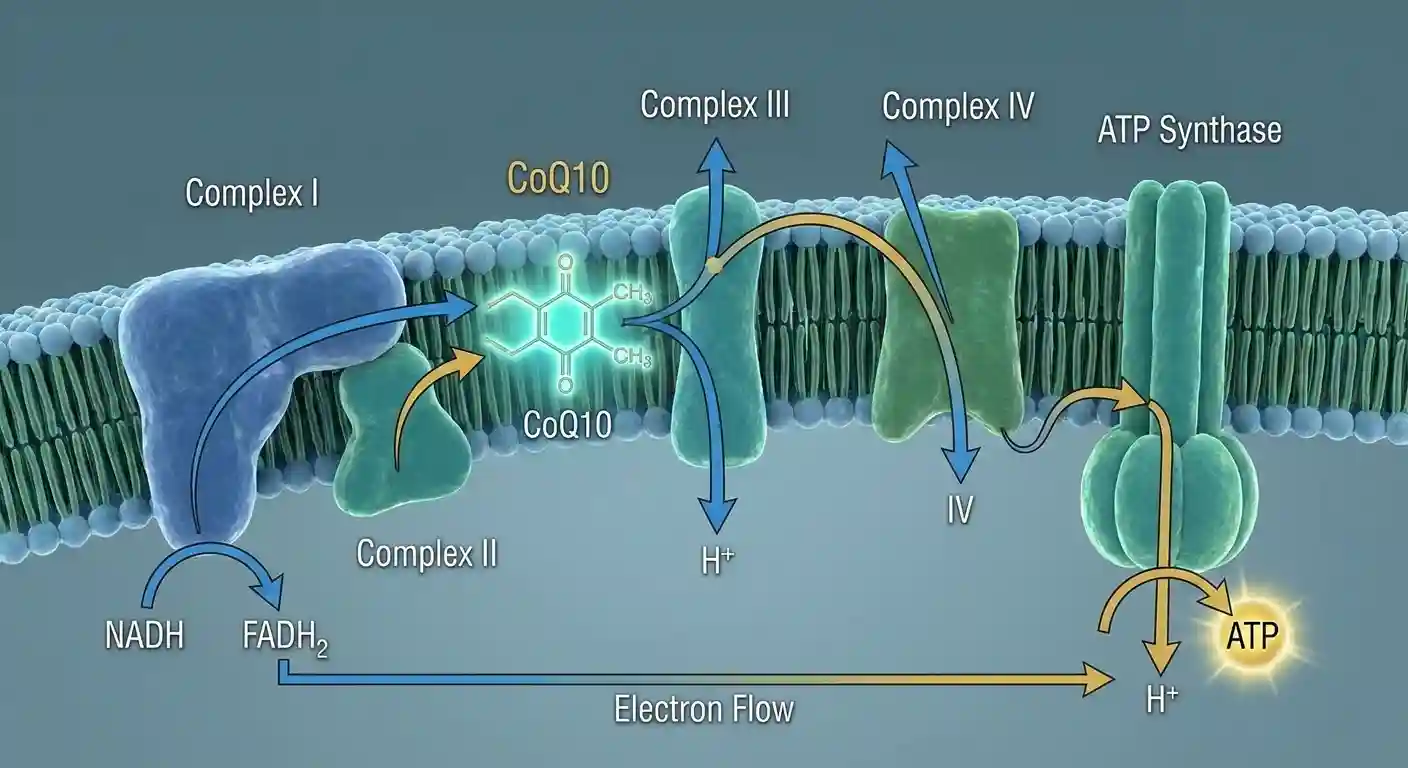
CoQ10 is an essential endogenous compound synthesized via the mevalonate pathway, the same pathway responsible for cholesterol synthesis. Its primary and most critical function is as a vital component of the mitochondrial electron transport chain (ETC). Within the inner mitochondrial membrane, CoQ10 functions as a mobile electron carrier, accepting electrons from Complex I (NADH dehydrogenase) and Complex II (succinate dehydrogenase) and transferring them to Complex III (cytochrome bc1 complex). This electron shuttling is a fundamental step in oxidative phosphorylation, the process that generates approximately 95% of the cell’s energy in the form of adenosine triphosphate (ATP). Additionally, in its reduced ubiquinol form, CoQ10 is one of the most important lipid-soluble antioxidants, protecting cell membranes and lipoproteins from oxidative damage.
Medical Nutrition Therapy (MNT) Applications
The clinical use of CoQ10 in MNT is primarily focused on conditions related to mitochondrial dysfunction or increased oxidative stress.
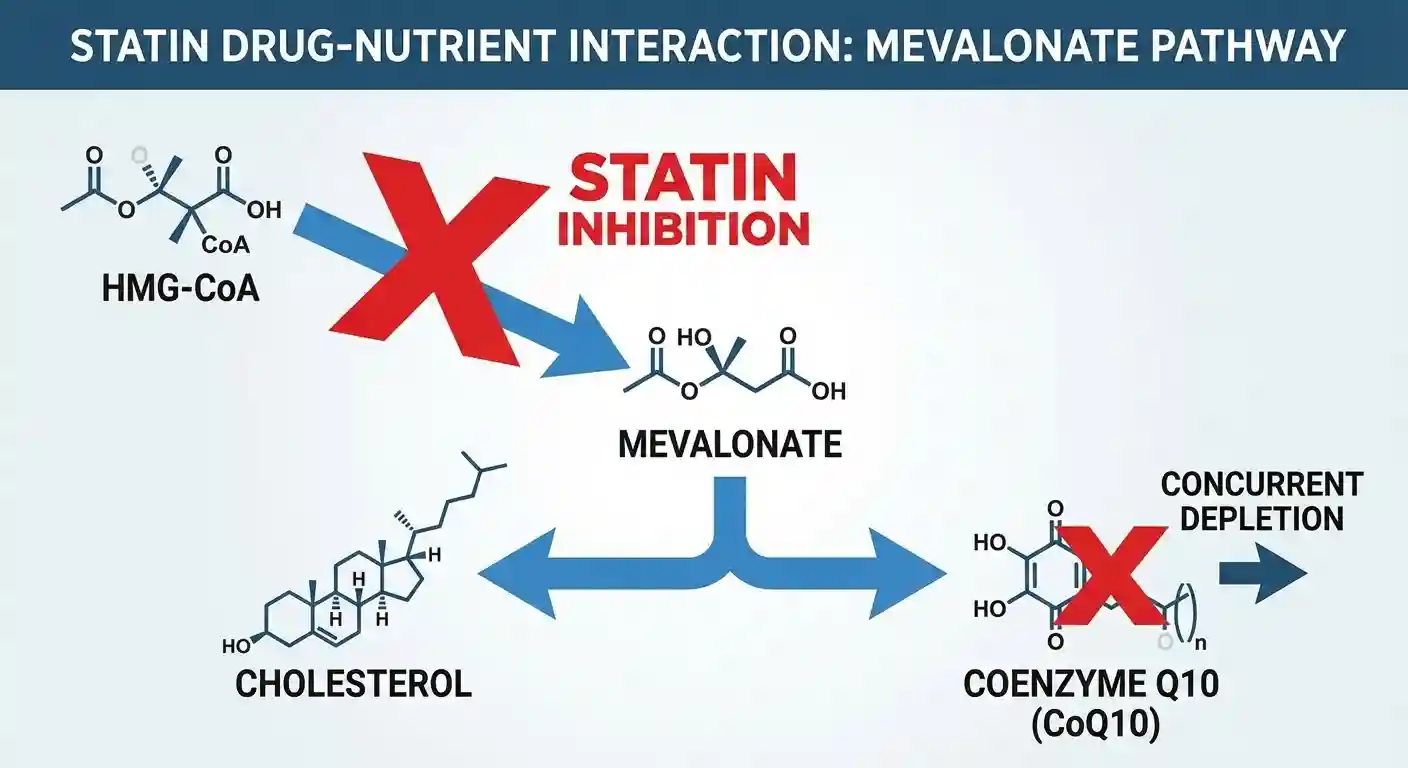
- Statin-Associated Myopathy: This is the most discussed application. Since statin medications inhibit HMG-CoA reductase, they block the mevalonate pathway, which can lead to a concurrent depletion of endogenous CoQ10 synthesis. While evidence is mixed, some clinical guidelines suggest that CoQ10 supplementation may be considered in patients experiencing statin-associated muscle symptoms (SAMS).
- Heart Failure (HF): Myocardial tissue has high energy demands and is rich in mitochondria. Some studies suggest that CoQ10 levels are lower in patients with HF. It is sometimes used as an adjunctive therapy, with the hypothesis that it may improve myocardial bioenergetics.
- Primary Coenzyme Q10 Deficiency: A rare group of inherited mitochondrial disorders where genetic defects impair the endogenous synthesis of CoQ10. In these specific cases, high-dose CoQ10 supplementation is a primary line of treatment.
Dietary Sources & Bioavailability
While the body synthesizes most of its CoQ10, small amounts can be obtained from the diet. As a fat-soluble compound, its absorption is enhanced when consumed with a meal containing fats. The bioavailability of supplemental CoQ10 is generally low and variable.
| Source | Form of Nutrient | Estimated Bioavailability / Notes |
|---|---|---|
| Organ Meats (e.g., Heart, Liver) | Natural CoQ10 | Highest dietary concentration. |
| Fatty Fish (e.g., Mackerel, Sardines) | Natural CoQ10 | Moderate concentration. |
| Ubiquinone Supplements | Oxidized form | Standard, less expensive form. Bioavailability is variable and requires conversion to ubiquinol in the body. |
| Ubiquinol Supplements | Reduced, active form | Generally considered to have higher bioavailability than ubiquinone, especially in older adults. |
Safety & Interactions
Coenzyme Q10 is generally well-tolerated, with no Tolerable Upper Intake Level (UL) established. Side effects are rare and typically mild, such as gastrointestinal upset.
Drug-Nutrient Interactions:
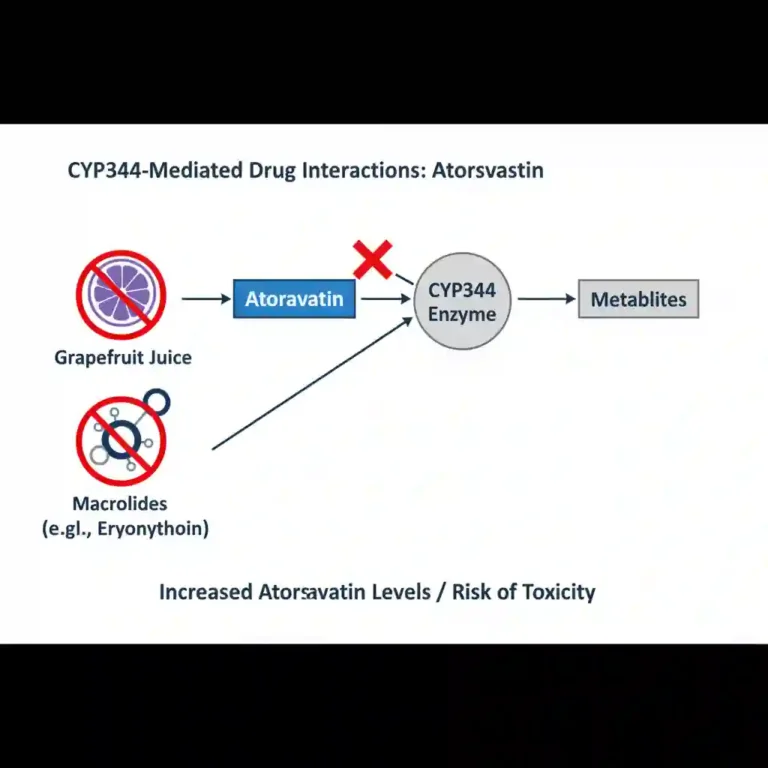
- Statin Medications: As mentioned, statins (e.g., Atorvastatin, Simvastatin) inhibit the HMG-CoA reductase enzyme, which is a key step in the synthesis of both cholesterol and CoQ10, potentially leading to lower endogenous levels.
- Warfarin: CoQ10 is structurally similar to Vitamin K2. There is a theoretical risk that high doses of CoQ10 could have a pro-coagulant effect, potentially decreasing the efficacy of the anticoagulant warfarin. Clinical monitoring is advised.
- Antihypertensive Drugs: CoQ10 may have a mild blood pressure-lowering effect, which could be additive when taken with antihypertensive medications.
“`