
Quick Facts: Medical Necessity Denials
| Aspect | Actionable Insight |
|---|---|
| The Definition | Services required to identify or treat an illness that meet standard clinical guidelines. |
| The Reality | Often used by insurers as a blanket excuse to deny expensive treatments or newer therapies. |
| Key Weapon | A detailed “Letter of Medical Necessity” (LMN) from your prescribing physician. |
| Appeal Success Rate | High. Many denials are overturned on the first internal appeal if properly documented. |
What Does “Not Medically Necessary” Mean?
When you receive an Explanation of Benefits (EOB) stating your claim was denied because the service was “not medically necessary,” it does not mean your doctor made a mistake. (See also: How to Read an EOB). It means the insurance company’s internal algorithms or reviewing physicians decided the treatment doesn’t fit their specific, often rigid, cost-saving criteria.
Insurance companies often require patients to try older, cheaper therapies first (a practice known as Step Therapy or “fail first”) before they will approve more expensive options, regardless of what your doctor recommends.
Typical Clinical Scenario: The MRI Battle
Presentation: A patient with severe, radiating lower back pain is prescribed a Lumbar MRI (CPT 72148) by an orthopedic surgeon after 6 weeks of physical therapy showed no improvement.
The Denial: The insurance denies the prior authorization, stating “Not Medically Necessary,” claiming the patient must try 12 weeks of physical therapy first.
Resolution: The patient appeals, providing clinical notes showing worsening neurological symptoms (numbness). The appeal references clinical guidelines stating an immediate MRI is necessary when progressive neurological deficit is present. The denial is overturned.
How to Build a Winning Appeal
Fighting a medical necessity denial requires shifting the conversation from cost to clinical evidence. Here is the standard protocol for an effective appeal:
1. Request the Clinical Rationale
You have a legal right to know exactly why the claim was denied. Call your insurer and request the specific Clinical Policy Bulletin (CPB) or guideline they used to make their decision.
2. Gather Your Evidence
An appeal is only as strong as its documentation. You must compile:
- Complete medical records from the prescribing doctor.
- Relevant test results or imaging reports.
- Proof of previous “failed” treatments (e.g., receipts for physical therapy, pharmacy records showing you tried cheaper medications).
3. Obtain a Letter of Medical Necessity (LMN)
Ask your doctor to write a detailed letter. It must explicitly state your diagnosis (with the correct ICD-10 code), the proposed treatment (with the CPT code), and specifically address the insurance company’s reason for denial, citing peer-reviewed medical literature if possible.
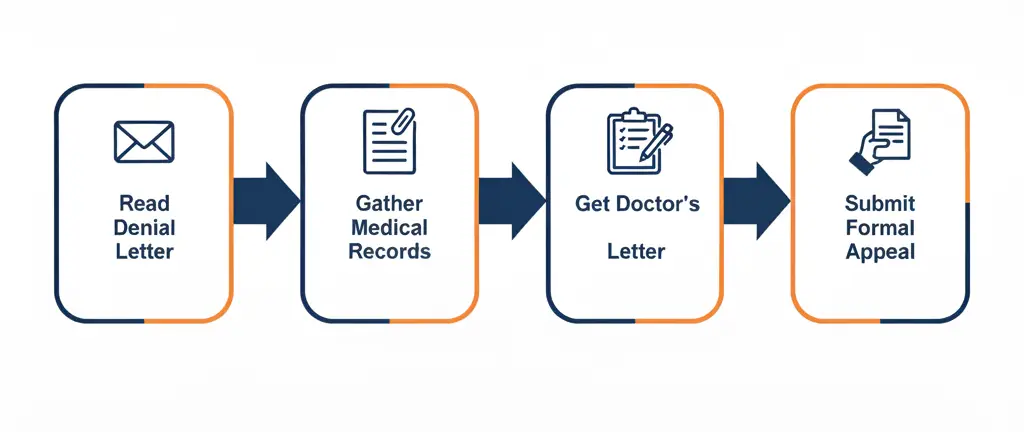
4. Draft the Appeal Letter
Your formal appeal letter should summarize the situation, reference the doctor’s LMN, and assert your right to the treatment.
Pro Tip: Staring at a blank page is overwhelming. You can use our AI Appeal Letter Generator to instantly draft a structured, professional appeal based on your specific denial scenario.
Frequently Asked Questions
What is a Peer-to-Peer review?
Before a formal appeal, your doctor can request a Peer-to-Peer (P2P) review. This is a phone call between your doctor and the insurance company’s medical director. It is often the fastest way to get a “not medically necessary” denial overturned, as your doctor can directly explain the clinical nuances.
What happens if my internal appeal is denied?
If your insurance company upholds the denial after their internal review process, you have the right under the Affordable Care Act (ACA) to an External Review. This involves an independent third party evaluating your case, and their decision is legally binding on the insurance company.