
Quick Facts: Anatomy of an EOB
| Term | Clinical/Financial Meaning |
|---|---|
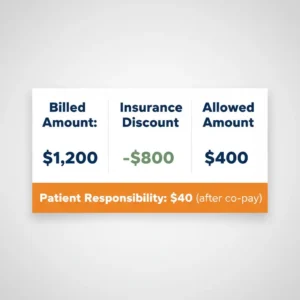
| Billed Amount | The “sticker price” sent by the provider. Often highly inflated. |
| Allowed Amount | The maximum amount the insurance will pay for a service based on their contract. |
| Member Rate | The discounted rate negotiated between your insurer and the hospital. |
| Remark Codes | Alphabetical codes explaining why a service was denied or reduced. |
What is an Explanation of Benefits (EOB)?
An Explanation of Benefits (EOB) is a statement sent by your health insurance company after you receive medical services. Despite its appearance, it is not a bill. It is a report detailing what the provider charged, what the insurance covered, and what portion you are contractually obligated to pay. Understanding this document is the first line of defense against overbilling and insurance errors.
Typical Clinical Scenario: The “Out-of-Network” Surprise
Presentation: A patient receives an EOB for a recent elective surgery. The “Billed Amount” is $25,000, but the “Insurance Paid” column shows $0. A remark code at the bottom reads “Service from an non-participating provider.”
Analysis: The patient assumed the hospital was in-network, but the specific surgeon or anesthesiologist was not. This results in “Balance Billing,” where the patient is asked to pay the full $25,000.
Resolution: By identifying this on the EOB before receiving the actual hospital bill, the patient can use the No Surprises Act to challenge the charge or use an AI Appeal Letter to request an in-network exception.
Decoding the Essential EOB Columns
To audit your medical expenses, you must reconcile these three figures:
1. The Billed Amount vs. Allowed Amount
Hospitals often bill 300% to 500% more than the actual cost of care. The Allowed Amount is the only number that matters—it is the ceiling price determined by your insurance. If a hospital bills you for anything above the Allowed Amount (excluding your deductible/co-pay), this is illegal “balance billing” in many states.
2. Remark and Reason Codes
Every denied line item on an EOB will have a code (e.g., CO-45, PR-1). These are clinical justifications for non-payment. Common reasons include:
- Medical Necessity: The insurer claims the procedure wasn’t needed.
- Bundling: Multiple procedures were billed separately when they should have been one code (a form of Upcoding).
How to Spot Errors on Your EOB
Cross-reference your EOB with your Itemized Bill. Look for duplicate billing (charging twice for the same CPT code) or phantom charges (billing for services never rendered). If the EOB shows a denial for “missing information,” it often means the hospital submitted the wrong ICD-10 diagnosis code.
Frequently Asked Questions
Should I pay the hospital before receiving the EOB?
No. Never pay a medical bill until you have received and reviewed the corresponding EOB from your insurance. Hospitals frequently send bills before the insurance has finished processing the claim, leading to overpayment.
What if the EOB says I owe more than I expected?
Check the “Remark Codes” to see why. If the claim was denied due to “Medical Necessity,” you have the right to an internal appeal. You can use our AI Insurance Appeal Tool to draft a formal rebuttal based on your specific denial code.