
Executive Summary
Water is an essential nutrient and the primary chemical component of the body, constituting the majority of an individual’s body mass. Maintaining adequate hydration, or euhydration, is critical for sustaining numerous physiological processes and overall homeostasis. Water functions as a universal solvent, a transport medium, a temperature regulator, and a participant in countless metabolic reactions. Consequently, maintaining fluid and electrolyte balance is a cornerstone of human health, and deviations from this state, such as dehydration, can significantly impair physical and cognitive function.
Key Data Points
- Medium for Cellular and Metabolic Function: Water is the solvent in which all metabolic processes occur, facilitating the transport of nutrients, hormones, and oxygen to cells and the removal of metabolic waste products.
- Thermoregulation: Adequate hydration is essential for the body’s thermoregulatory capacity. Water’s high heat capacity helps absorb metabolic heat, and its role in sweat production allows for effective evaporative cooling during periods of heat stress or physical exertion.
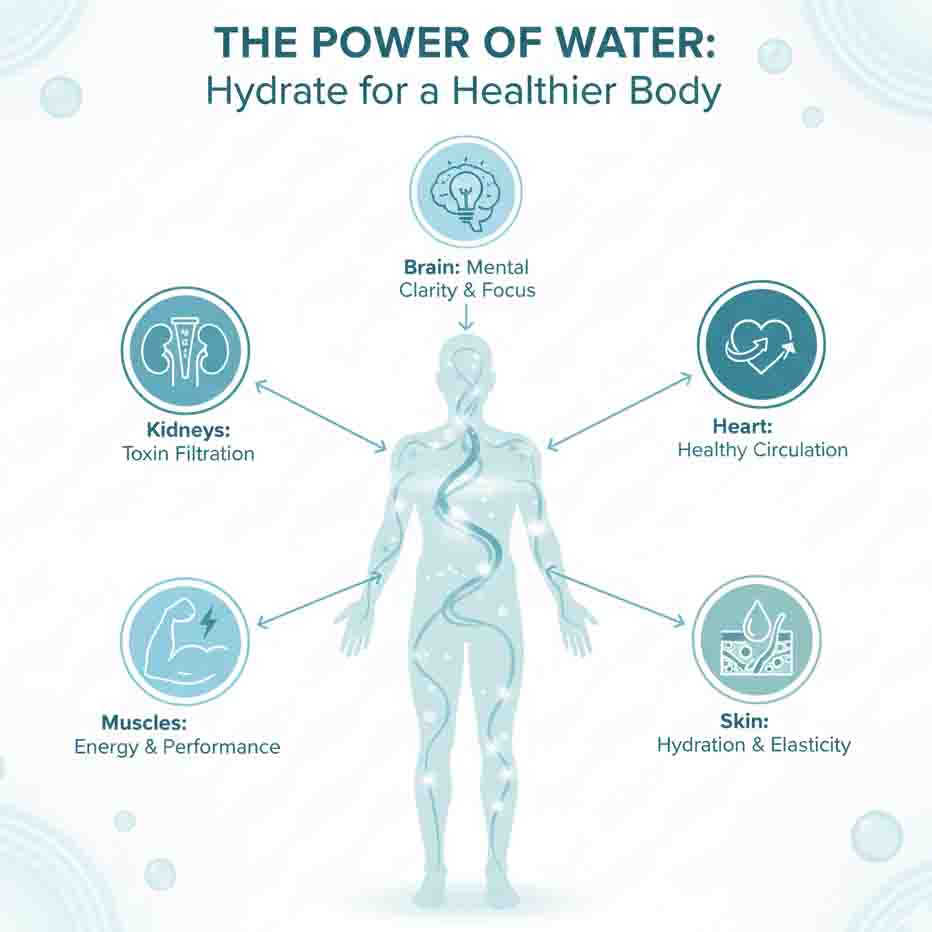
- Renal Function and Solute Homeostasis: The kidneys require sufficient water volume to effectively filter waste products from the blood and excrete them as urine. Proper hydration is necessary to maintain normal plasma osmolality.
- Cardiovascular Function: Water is the main component of blood plasma. Maintaining adequate intravascular volume is crucial for supporting normal blood pressure, cardiac output, and the transport of blood cells and nutrients throughout the body.
- Cognitive Performance: Even mild dehydration has been shown to negatively impact cognitive functions, including concentration, alertness, and short-term memory.
- Musculoskeletal and Joint Health: Water is a key component of synovial fluid, which provides lubrication and cushioning for joints. It is also essential for maintaining the structural integrity and function of muscle cells.
Research Methodology / Context
The principles of hydration and fluid balance are foundational concepts in medical physiology. Research in this area utilizes a variety of methodologies to assess hydration status, including plasma and urine osmolality measurements, isotope dilution techniques to determine total body water, and bioelectrical impedance analysis. Human performance studies in controlled laboratory settings are often used to quantify the impact of progressive dehydration on physiological and cognitive outcomes. The scientific context is the body’s intricate osmoregulatory system, which involves the hypothalamus, antidiuretic hormone (ADH), and the kidneys to tightly control water balance.
Clinical Implications
- A Key Vital Sign: Hydration status is a critical factor in clinical assessment, particularly in pediatric, geriatric, and critically ill populations. Dehydration can be both a symptom of underlying disease and a cause of significant morbidity.
- Foundation of Patient Counseling: Advising on adequate fluid intake is a fundamental component of preventative health counseling and is particularly important in the management of conditions such as nephrolithiasis (kidney stones) and urinary tract infections.
- Intravenous Fluid Resuscitation: The principles of fluid balance are central to the management of acutely ill patients, where intravenous fluid administration is a life-saving intervention to restore and maintain intravascular volume.
- Consideration in Pharmacokinetics: A patient’s hydration status can influence the distribution, metabolism, and excretion of various medications, potentially affecting their efficacy and toxicity.